
Orthotic Care in Elite Sports
Canadian expertise in orthotic care, professional sports and digital manufacturing: Individual treatment concepts and the exchange of knowledge among users took centre stage at a two-day paromed professional event in Neubeuern.
Neubeuern. How does treating a professional athlete differ from everyday orthotic care? What role do biomechanical analysis, digital foot scanning and CAD-based manufacturing play? And what can practitioners learn from international treatment concepts for their own work?
These were some of the questions explored during a two-day professional event held by paromed at its headquarters in Neubeuern. The focus was on practical insights into orthotic care, professional exchange and different approaches to individual orthotic solutions.
A Look at Canada
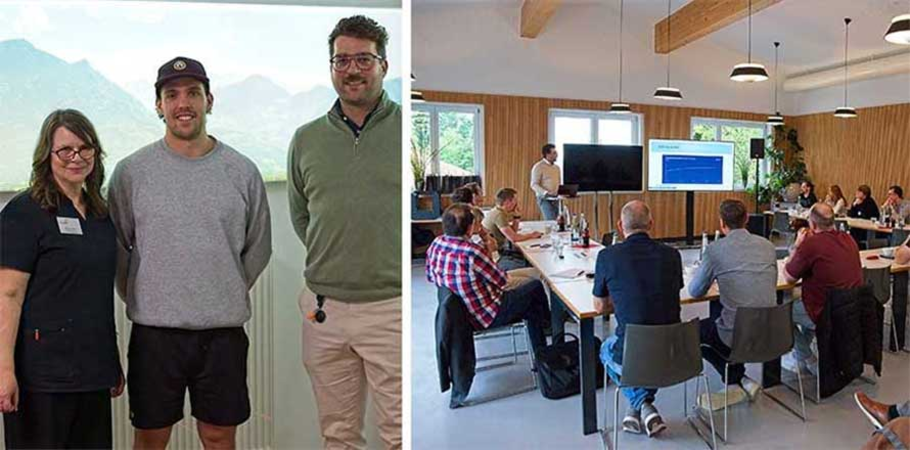
The professional focus of the first day was a four-hour workshop with Michele Peters of PedBasis MSD Inc. in Toronto. A long-standing paromed user, Peters brought her experience in providing orthotic care for elite and professional athletes to Germany.
Using specific examples, Peters demonstrated her approach – from biomechanical analysis and digital assessment through to the development of an individual orthotic solution. Participants were able to follow the process not only in theory: a live demonstration showed the complete workflow from foot scan to finished orthotic.
The international perspective in particular sparked lively discussion. Different experiences and approaches demonstrate that modern orthotic care involves far more than simply applying a particular technique. It relies on careful observation, experience and the enjoyment of approaching each patient and their individual situation with a fresh perspective.
Elite Sports from Two Perspectives
With Scott Feser of the Starbulls Rosenheim, the workshop also incorporated the perspective of a professional athlete.
This brought two viewpoints together directly: on the one hand, professional analysis and orthotic care; on the other, the athlete’s perspective and his immediate perception of how changes to an orthotic solution affect movement and physical load.
For participants, this resulted in a practical exchange on the specific demands that elite sport places on individual orthotic care – and on which insights can also be transferred to the treatment of other patients.
Professional Expertise Meets Digital Possibilities
The second day focused on the continued development of the digital workshop. Current developments in paromed technology were presented and discussed, along with options for designing complex orthotics in CAD and the use of different materials.
Particular emphasis was placed on the interaction between professional expertise and technology. Digital processes can capture data, support individual workflow steps and make customised designs reproducible. However, the resulting orthotic solution continues to depend on the practitioner’s experience and professional expertise.
This combination is becoming increasingly important, particularly against the backdrop of skilled labour shortages and growing demands on orthopaedic footwear businesses.
International Exchange in Everyday Practice
With paroCampus, paromed also introduced a new continuing education concept. Regular digital formats will cover topics relating to digital orthotic care, software, materials and manufacturing. One of its regular features is paroCampus Monday, offering users practical webinars on an ongoing basis.
For paromed, this transfer of knowledge is the result of many years of internationalisation. Users in different countries work with comparable technologies, yet develop different approaches and gain different experiences in applying them.
This creates potential that extends far beyond a single event: learning from one another, sharing experiences in orthotic care and gaining new ideas for everyday practice.
Alongside the professional programme, a joint visit to the Rosenheim Herbstfest provided an opportunity to continue this exchange on a more personal level.


